Corridor Analysis
Mobile Money Meets Source Code: How Wallet-First Markets Are Reshaping Remittance Technology
In markets where mobile wallets are the primary financial infrastructure, remittance platforms must integrate differently — and source-code ownership enables the deep wallet integrations these corridors demand.
Quick Answer
In wallet-first markets across Sub-Saharan Africa, Southeast Asia and Latin America, mobile money wallets — not bank accounts — are the primary financial infrastructure. Remittance platforms serving these corridors require deep wallet integrations: real-time wallet credits, wallet-balance-based routing and agent-network cash-out support. Source-code ownership enables the close integration with regional wallet providers that global SaaS platforms, built around bank-centric assumptions, cannot deliver.
Key Takeaways
- In wallet-first markets, wallets are the financial infrastructure, not banks.
- Remittance-to-wallet requires real-time credit posting, not batch bank processing.
- Each wallet provider has unique APIs — deep regional integrations are mandatory.
- Source-code ownership enables wallet integrations that global SaaS cannot prioritize.
The wallet-first reality
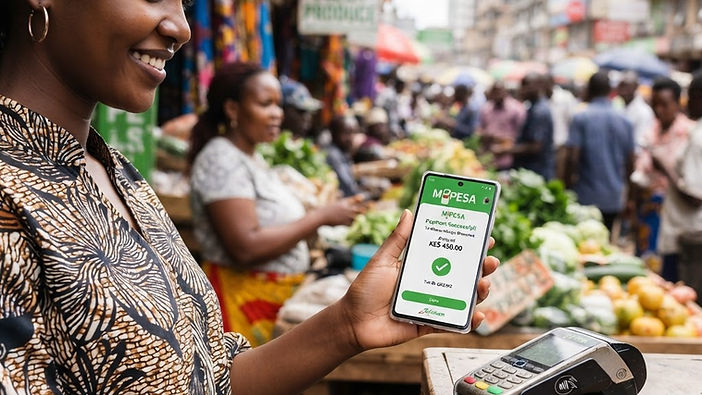
In Kenya, M-PESA processes more transactions than the country's banking system. Across Sub-Saharan Africa, mobile money accounts outnumber bank accounts several-fold in most markets. In the Philippines, GCash and Maya serve tens of millions. In Bangladesh, bKash reaches customers the banking system never will.
For remittance platforms, this changes the fundamental integration question. In bank-centric markets, the question is which payout network covers the destination banks. In wallet-first markets, the question is which wallet providers dominate — and how deeply the platform integrates with each.
The distinction is not just technical but conceptual. A wallet payout is not a bank deposit with a different label; it is a different transaction type with different settlement mechanics, different status-tracking requirements and different customer expectations around speed.
What wallet integration actually requires
Wallet payouts should post in real time. When a beneficiary's wallet receives credit, the sender's platform should confirm it within seconds — a customer expectation set by the wallet providers' own peer-to-peer transfer speeds. Batch-based bank integration models cannot deliver this.
Wallet balance checking enables better routing: if the platform can query a beneficiary's wallet status before initiating a payout, it can detect dormant wallets and route to alternatives. This requires API access that each wallet provider offers differently.
Agent-network cash-out completes the loop. In wallet-first markets, beneficiaries commonly receive remittance into a wallet and cash out at an agent. The platform does not need to manage the cash-out — the wallet provider handles it — but customer communication should reflect the wallet-plus-agent journey accurately.
The integration depth problem
Every wallet provider's API is unique. M-PESA's Daraja API, GCash's partner gateway, bKash's merchant APIs — each has its own authentication model, its own transaction semantics, its own status-callback patterns. Deep integration with any wallet provider is a genuine engineering project.
Global SaaS platforms face an economic constraint: engineering wallet integrations for every regional provider is expensive, and their engineering prioritization favors the largest markets. Operators in corridors served by regional wallets often wait indefinitely for their provider to appear on the platform's roadmap.
Source-code ownership dissolves the constraint. The operator's engineers integrate the wallet providers their corridors actually use, on their own timeline, with the integration depth their service model requires. For operators serving wallet-first corridors, this flexibility is frequently the decisive factor in platform choice.
Designing for the wallet-first customer journey
Wallet-first corridors reshape the customer experience, not just the backend. Senders expect real-time confirmation: money sent, wallet credited, beneficiary notified — all within moments. The platform's status tracking and notification flows must match this expectation rather than the next-business-day model bank-centric platforms normalize.
The remittance product itself adapts. Wallet-first markets often favor smaller, more frequent transfers over the larger periodic transfers bank-centric corridors see. Fee structures, FX markups and compliance thresholds should reflect this pattern — configurations that operators with source-code access can implement precisely to their corridor economics.
The winners in wallet-first corridors will be operators who treat wallets as first-class infrastructure — not as an alternative payout method, but as the primary system their product is designed around. Source-code ownership is how that product design freedom is realized.
Share this article
Related Reading
Evaluate the platform for your deployment
Request a private demo tailored to your corridors and integrations.